
Police Roadblocks: ZRP Responds to Nationwide Outcry


The Zimbabwe Republic Police (ZRP) has issued a press statement addressing widespread public concerns over the surge of police roadblocks across the country, following increasing complaints from motorists about harassment, corruption, and traffic congestion caused by frequent stops.
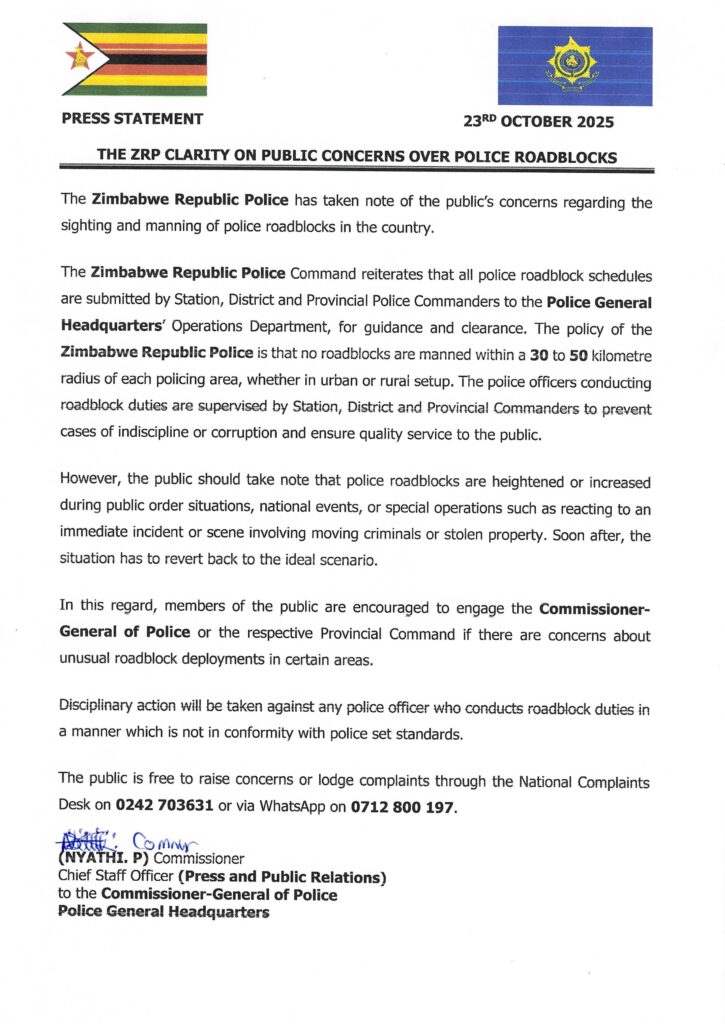
In the statement dated 23 October 2025, the ZRP reiterated that all roadblock deployments must be formally approved through its command structure. According to the police, every roadblock schedule is submitted by Station, District, and Provincial Commanders to the Police General Headquarters’ Operations Department for clearance.
Source: X
The ZRP emphasized that no roadblocks should be positioned within a 30 to 50 kilometre radius of each other, regardless of whether the area is urban or rural. It added that officers conducting these duties are supervised to ensure discipline and prevent corruption.
“The policy of the Zimbabwe Republic Police is that no roadblocks are manned within a 30 to 50 kilometre radius of each policing area,” the statement reads. “Police officers conducting roadblock duties are supervised by Station, District and Provincial Commanders to prevent cases of indiscipline or corruption and ensure quality service to the public.”
However, the ZRP noted that the number of roadblocks may temporarily increase during public order situations, national events, or emergencies, such as pursuing criminals or recovering stolen property. Once these situations stabilize, the police said, the roadblock density should “revert back to the ideal scenario.”
Members of the public were urged to report unusual or suspicious deployments directly to the Commissioner-General of Police or relevant Provincial Command. Complaints can also be submitted through the National Complaints Desk at 0242 703631 or via WhatsApp on 0712 800 197.
The statement, signed by Assistant Commissioner P. Nyathi, Chief Staff Officer (ZRP Press and Public Relations), concluded by warning that disciplinary action would be taken against any officer who conducts roadblock duties “in a manner which is not in conformity with police set standards.”
Public Reaction To Roadblock Issue: “Lip Service” and Frustration
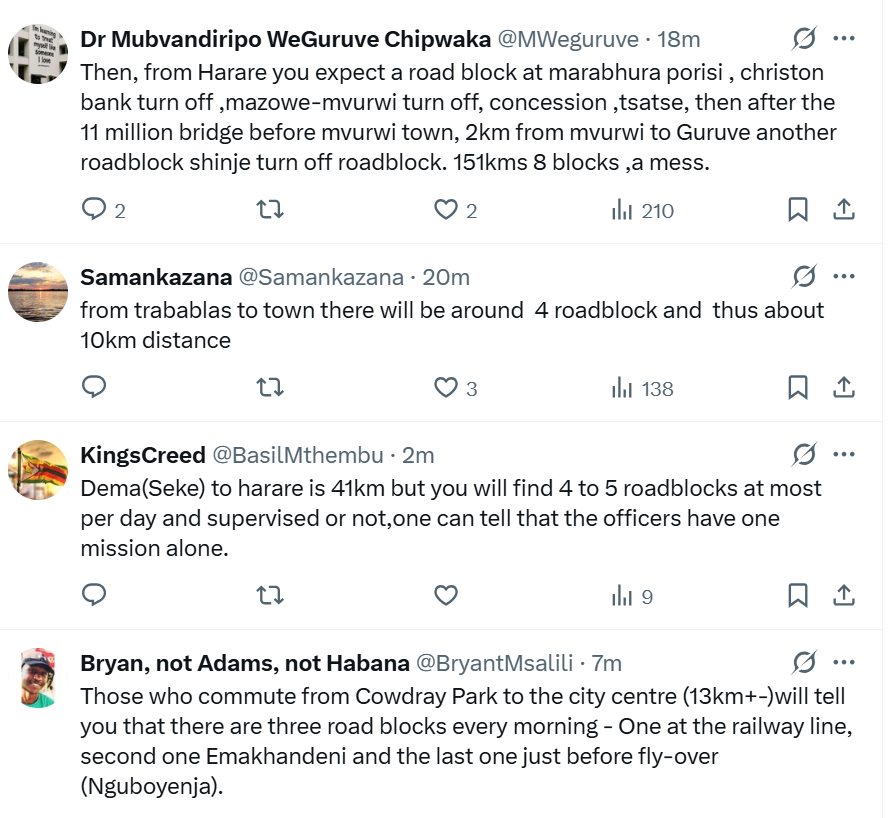
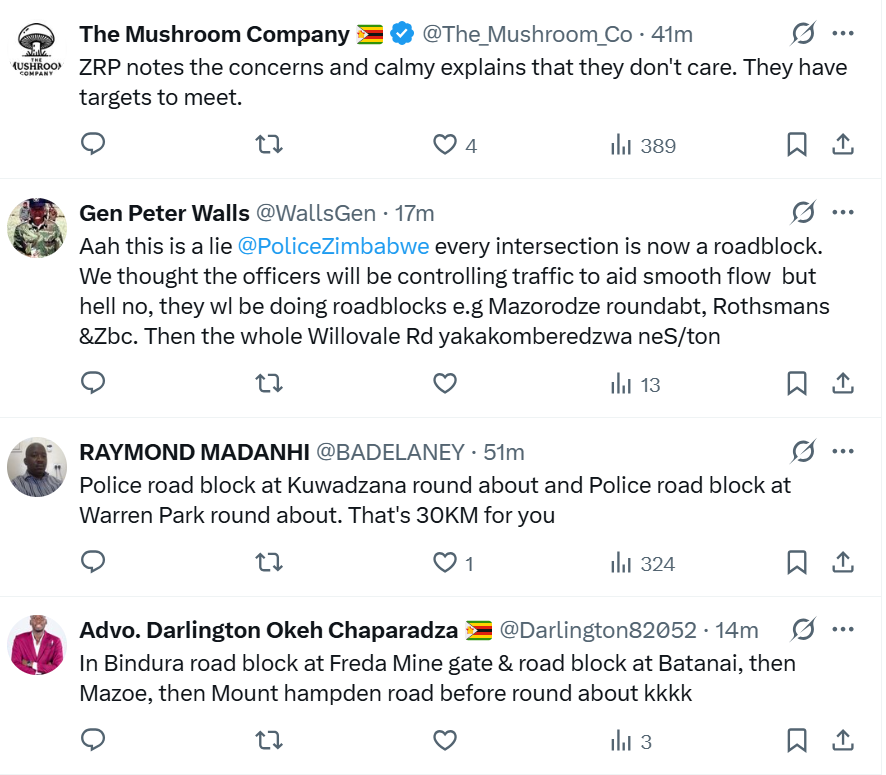
Following the publication of the statement on the official ZRP X account, the announcement sparked widespread backlash from motorists and citizens who accused the police of disregarding their own policies. Many users shared firsthand accounts of encountering multiple roadblocks within short distances, some as close as 10 kilometres apart. Below are some of the comments.
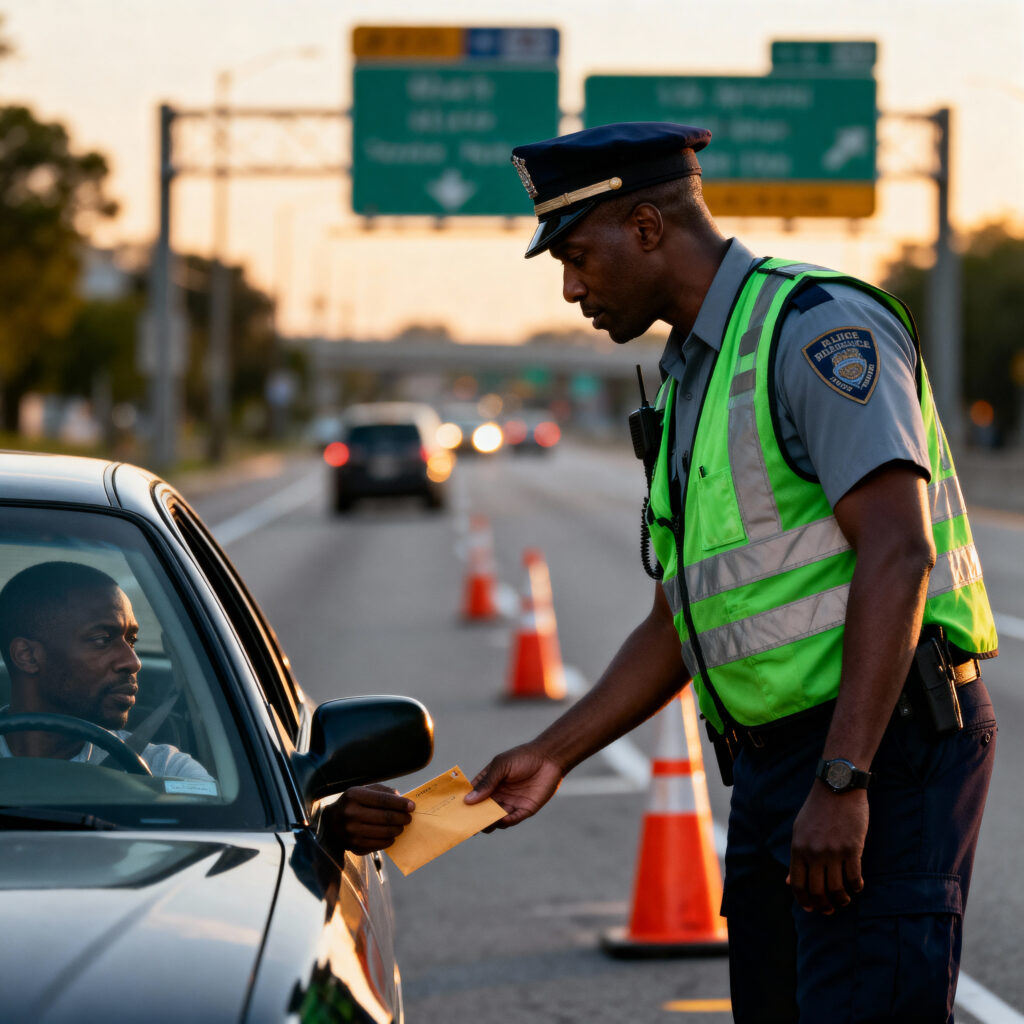
Critics alleged that officers continue to use these roadblocks as opportunities to solicit bribes, especially during morning and evening rush hours. Several commenters described being delayed on their way to work, claiming that the checkpoints were more about “collecting money” than enforcing traffic laws.
Source: OpenArt AI
Others cited specific routes around Harare, including Simon Mazorodze Road, Warren Park, Kuwadzana, and Norton, where roadblocks reportedly appear in close succession, contradicting the 30–50 km spacing guideline reiterated in the ZRP statement.
Some social media users mocked the timing of the release, arguing that while the police publicly reaffirm discipline and oversight, officers on the ground “already operate outside the system.” Others questioned whether the ZRP genuinely investigates citizen reports or complaints lodged through the hotlines provided.
The reactions echo long-standing public frustration over police conduct on Zimbabwe’s roads. Roadblocks have historically been associated with extortion and corruption, particularly during the 2010s, when motorists frequently complained about officers demanding small cash “spot fines.”
Official Response Still Awaited
As of Thursday evening, the ZRP had not issued a follow-up statement addressing the online backlash. However, the earlier post by the police encouraging citizens to report “rogue officers” and impersonators (made on October 21, 2025) suggests an ongoing internal effort to rebuild public trust.
Despite these assurances, many Zimbabweans remain skeptical (as they should). The prevailing sentiment on social media reflects a belief that meaningful reform will depend not on public statements, but on visible change in how police conduct themselves on the country’s roads.

Related Stories