Zimbabwe Term Limits Deadly Threat: US Blasts 2025 Mnangagwa Power Grab

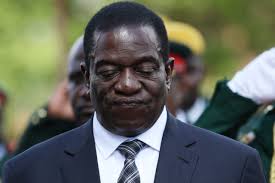
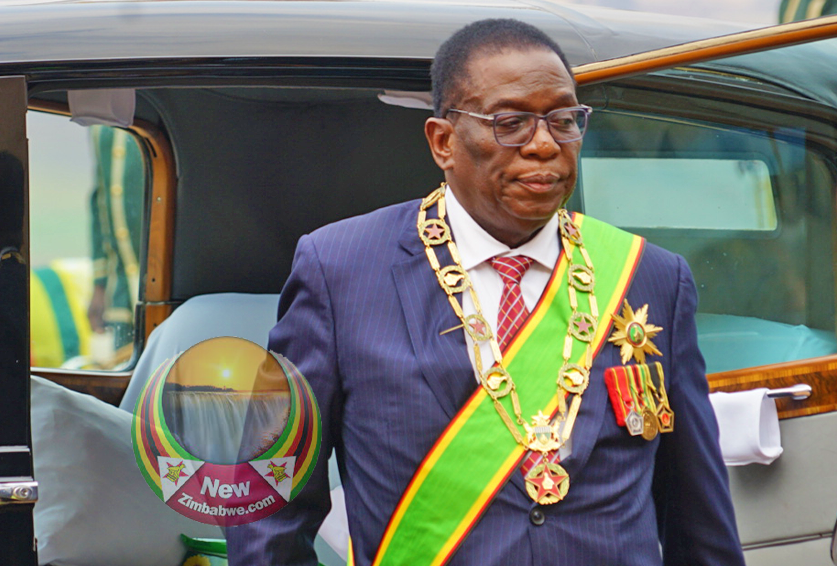
Harare – The fragile state of Zimbabwean democracy has faced a powerful international rebuke this week after a prominent U.S. legislator issued a shock warning against plans to amend Zimbabwe term limits to extend President Emmerson Mnangagwa’s rule. The move, championed by the ruling ZANU-PF party, has instantly rekindled anxieties both domestically and abroad about a possible regression to the authoritarian, constitutional abuses that defined the nearly four-decade rule of the late Robert Mugabe.
On October 22, 2025, Congressman Gregory Meeks, the ranking member of the influential U.S. House Foreign Affairs Committee, issued a severe and unequivocal statement to the government in Harare. Meeks, a key figure in shaping U.S. policy toward Africa, warned that efforts to manipulate the constitution would fundamentally undermine the democratic framework Mnangagwa swore to protect upon taking power.
“President Mnangagwa swore to strengthen the pillars of Zimbabwe’s democracy and accept Zimbabwe term limits. Extending his term would erode that foundation,” Meeks’ statement declared.
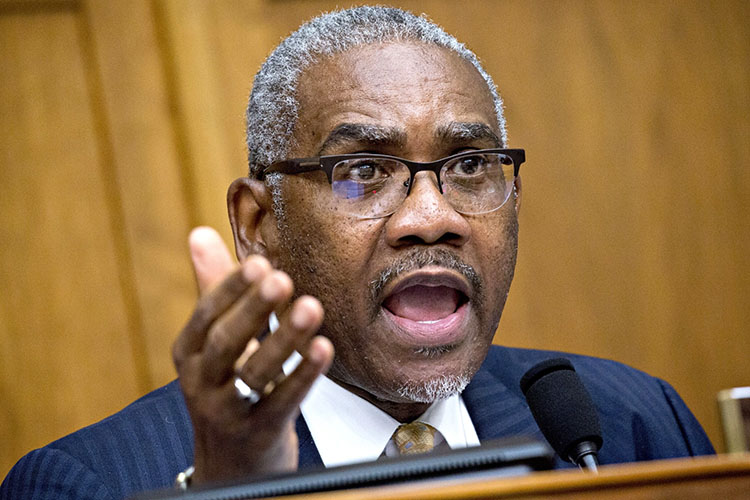
The U.S. is “closely monitoring developments in Harare,” a diplomatic signal that any constitutional upheaval over the Zimbabwe presidential term limits could trigger new foreign policy and legislative consequences. For a nation desperate for foreign investment and relief from international sanctions, the perceived dismantling of the rule of law is a direct threat to its economic aspirations.
The Mutare Mandate: A Constitutional Breach
The U.S. statement came in direct response to a high-profile decision made during the ZANU-PF’s annual conference held in Mutare on October 18-19, 2025. During the closed-door proceedings, party delegates passed a resolution that formally directed the government to begin the process of amending the national constitution.
Zimbabwe’s existing 2013 Constitution—a core democratic safeguard enacted in the post-Mugabe era—imposes a critical limit: presidents are restricted to two five-year terms. Given that President Mnangagwa, 83, began his first full term in 2018 and was re-elected in 2023, he is constitutionally mandated to step down in 2028.
However, the ZANU-PF resolution seeks to amend sections of the constitution pertaining to presidential tenure and election timing. The explicit goal is to extend Mnangagwa’s rule by at least two years, pushing his departure until 2030. ZANU-PF officials, including Justice Minister Ziyambi Ziyambi, have publicly framed the proposed amendment as being necessary for “continuity, stability, and sustained transformation.” This rationale, however, is met with deep skepticism by analysts who view the move as a transparent effort to delay the inevitable and often disruptive internal succession battle, allowing Mnangagwa to consolidate his faction’s power.
CONSTITUTIONAL law expert Professor Lovemore Madhuku speaking to online news platform 263Chat has strongly rejected the idea of extending presidential term limits in Zimbabwe.
“We don’t know the specifics of their plan; they haven’t said exactly how they’d want to change the constitution. But one thing is absolutely clear: they cannot ensure the president remains in office past his term limit in 2028,” said Madhuku
The President himself has offered conflicting signals. In 2024, addressing the internal chatter about an extension, Mnangagwa claimed, “I will persuade the persuaders not to persuade me.” Critics view this rhetoric as political theatre, arguing that the recent party conference resolution—overwhelmingly passed by his loyalists—is the clearest indication yet that the push is tacitly sanctioned, if not outright desired, by the highest office. This attempt to circumvent Zimbabwe term limits risks confirming the worst fears about the government’s commitment to democratic principles.
The Shadow of Robert Mugabe
The current constitutional controversy is intensely colored by the legacy of Robert Mugabe, whose 37-year reign became synonymous with unchecked power, economic collapse, and state-sponsored human rights abuses. The mere suggestion of tampering with presidential term limits strikes a deeply resonant chord, directly referencing Mugabe’s relentless efforts to maintain power indefinitely.
The 2013 Constitution was specifically written to prevent such future abuses of power. By seeking to dismantle these core term limit protections, ZANU-PF is inviting direct and damning comparison to the very era Mnangagwa and his allies claimed to have ended in 2017. The proposed two-year extension—while short—is viewed by the opposition and international observers as the first step down a familiar and perilous road of constitutional authoritarianism.
Mugabe’s later years were characterized by the use of opaque political maneuvers, rapid-fire constitutional amendments, and the deployment of state security apparatuses to suppress dissent and ensure his eternal rule. The current actions threaten to discredit Mnangagwa’s post-2017 rhetoric of a “New Dispensation” and a “Zimbabwe is Open for Business” policy. The U.S. warning explicitly inline with the Zimbabwe term limits underscores that global trust will be gauged not by economic promises, but by an unwavering adherence to democratic principles, with respect for the peaceful transfer of power being paramount.
Operation Restore Legacy: The Unfinished Coup
To fully appreciate the stakes involved in the current debate, it is essential to revisit the dramatic events of November 2017, when a military intervention, branded “Operation Restore Legacy,” brought Mnangagwa to power. The intervention was not a popular uprising or a democratic revolution, but an internal political purge orchestrated by Mnangagwa’s faction of ZANU-PF, with the crucial backing of the military command, led by then-General Constantino Chiwenga.
The intervention was triggered by Mugabe’s decision to fire his then-Vice President, Emmerson Mnangagwa, in early November 2017. This was widely seen as an attempt to clear the path for the succession of his wife, Grace Mugabe. The military, with deep institutional and political interests tied to Mnangagwa, viewed Grace Mugabe’s potential ascent as an existential threat to their power structure.
Tanks were deployed to the outskirts of Harare, and the Zimbabwe Defence Forces (ZDF) took control of the state broadcaster, ZBC. Critically, the military went to extreme lengths to insist they were not executing a coup, but were merely “targeting criminals around” the President who were causing social and economic suffering. This carefully crafted narrative was designed to stave off immediate international condemnation of a full military takeover.
Following days of negotiation, house arrest, and massive public demonstrations demanding his resignation, Robert Mugabe finally stepped down on November 21, 2017, just as impeachment proceedings were set to begin in Parliament. Mnangagwa, returning from brief exile, was swiftly sworn in, promising a new era of democracy, economic reform, and a strict adherence to the constitution—the very document he is now under immense pressure to amend.
The 2017 transition was, therefore, an elite power transfer driven by military kingmakers. The current move to manipulate Zimbabwe term limits now risks proving that the promises of democracy made in 2017 were merely expedient rhetoric used to secure power and gain a semblance of international legitimacy.
Internal Rifts and the Path of Collision
The ZANU-PF’s motion to alter the constitutional provisions for Zimbabwe term limits has been met with immediate and forceful opposition, intensifying both political and internal party tensions.
The primary opposition, the Citizens Coalition for Change (CCC), has denounced the plan as “unlawful.” CCC leaders, including Jameson Timba, have passionately called for “civic vigilance” to defend the supremacy of the constitution. Legal analysts stress that amending the presidential term clauses is an arduous process that likely requires not just a parliamentary supermajority, but also two separate national referendums. This high legal bar ensures the matter will dominate the political landscape for the foreseeable future, inviting sustained legal and social conflict.
Adding to the complexity are the widening internal fissures within ZANU-PF. The succession battle has long pitted President Mnangagwa’s loyalists against supporters of Vice President Constantino Chiwenga, the retired general who played the decisive role in the 2017 coup. Chiwenga, who himself harbors presidential ambitions, has been the subject of several treason accusations amidst the cutthroat succession intrigue. The push for a two-year extension is an undeniable effort by Mnangagwa’s core support base to strategically sideline the Vice President and gain complete control over the party’s transition timeline.
If ZANU-PF proceeds with the constitutional amendment, the consequences for Zimbabwe could be severe and immediate. It would confirm to the international community that the “New Dispensation” is merely a continuation of the old authoritarian regime, making it highly unlikely that the U.S. or other Western powers would consider lifting targeted sanctions.
Congressman Meeks’ strong warning is a calculated diplomatic message: adherence to constitutional norms is non-negotiable for improved international relations. The stability of Zimbabwe, already grappling with deep economic crises and runaway inflation, now hinges entirely on whether its leaders choose to prioritize the rule of law or self-serving political expediency. The outcome of the fight over Zimbabwe term limits will decisively determine whether the nation finally steps into a stable democratic future or retreats into the familiar darkness of entrenched autocratic rule.

Related Stories



2 Comments
Comments are closed.
[…] As the celebrations continue, the message is clear: the legacy of Paul Mwazha is one of an unwavering faith that has miraculously spanned more than a century. READ ALSO-https://izwi24.com/mnangagwa-us-blasts-zimbabwe-term-limits/ […]
Doess your blog have a conntact page? I’m having a tough tike locating itt but, I’d liuke tto senbd
you aan e-mail. I’ve goot somke suggestjons forr your blog
youu mikght bbe inteeested inn hearing. Eitrher way, great wbsite annd I look forard tto sering
itt ikprove ovsr time.
my site: freepornmovies.biz